An area is set up in the class, where the teacher has an opportunity to have a one-on-one conversation with four or five children each day, with a particular topic in mind. Pupils have the opportunity to talk, to have language modelled for them and to get feedback on their conversation/ language. The conversation station can be used with any age group as an effective activity to promote vocabulary and language development in the classroom.
Category Archives: Blog
Morning Meeting (language discussion)
Have a section of wall/ board to display topics for discussion during ‘Morning Meeting ’. Ideally this could be in your ‘speaking and listening corner’/ oral language area. It is a perfect oral language activity for revising previous work, practicing and reinforcing new vocabulary and can be used as an opportunity for children to give presentations, look at items using the visualize and discussion etc.
Why is oral Language important?
Oral language is our earliest form of communication and it is essential as we use it daily to communicate our needs. Language to crucial to learning as it gives a child entry to a world of knowledge, unlocking the world of the imagination, reading, providing skills to write and helping us grow as individuals. However, without language, a word gap ensues.
Phrase of the Day
We all know that developing a love for reading in our pupils has many advantages, from expanding pupils’ vocabulary, helping with spelling, grammar, punctuation and much more.
Using the idea of D.E.A.R time (Drop everything and read) or E.R.I.C (Everyone reads in class) for twenty minutes a day, letting the pupils select their own books and read at a time during the school day that suits you, can have tremendous benefits for children (including those who don’t like to read as they just may discover a book that they like.)
Sample lesson plan for descriptive story writing using words-of-the-day and senses
Sample lesson plan for descriptive story (Some ‘jungle’ themed words of the day and descriptive story sheet on my Instagram highlights under the heading ‘jungle’. See teacher_julieanne.
Debating in the primary classroom
Debates are important in oral language as they develop a child’s ability to argue a point of view, a skill that is valuable in many aspects of life. These activities allow them to become better debaters through time and help them become critical thinkers, expressing their opinions and thoughts and gaining self-confidence.
Debating is not about raising your voice but about choosing your words wisely, making reasoned and well-thought-out arguments.
The aim with teaching pupils how to debate is not to start formal podium style debates immediately but rather work to develop and expand their debating vocabulary so that the pupils can understand and use the expressions in the correct context.
Words-of-the-Day Vocabulary
Research has shown that pupils need to encounter a new word 10 to 16 times in order to really ‘learn it’. When introducing new vocabulary, pupils need to get the opportunity to practice these new words and use them.
How to use photographs for oral discussion
Photographs or cut-outs from newspapers/ magazines are very useful for oral discussion…as long as you don’t select a famous person or someone familiar to the pupils.
Question time: Pupils can choose a photograph and discuss using questions such as …
Tips for Teaching Vocabulary
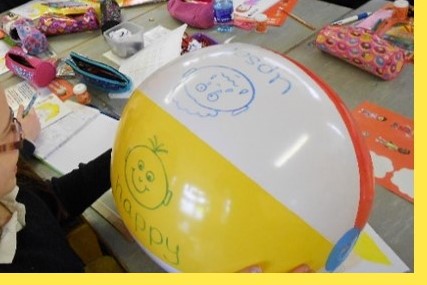
Pupils can find learning new vocabulary tedious and not much fun! The following ideas help reinforce the regular use of new vocabulary and therefore, pupils ability to retain and use it.
A flip chart can be useful in your ‘speaking and listening corner’.
It can be useful to have a flipchart in your ‘speaking and listening corner’. There are various things you will repeat each day as a teacher or during a particular lesson, and these pointers can be listed on a page in a flipchart ready for access at any time
 Let's get those kids talking!