Sample lesson plan for descriptive story (Some ‘jungle’ themed words of the day and descriptive story sheet on my Instagram highlights under the heading ‘jungle’. See teacher_julieanne.
Author Archives: julieannedevlin
Debating in the primary classroom
Debates are important in oral language as they develop a child’s ability to argue a point of view, a skill that is valuable in many aspects of life. These activities allow them to become better debaters through time and help them become critical thinkers, expressing their opinions and thoughts and gaining self-confidence.
Debating is not about raising your voice but about choosing your words wisely, making reasoned and well-thought-out arguments.
The aim with teaching pupils how to debate is not to start formal podium style debates immediately but rather work to develop and expand their debating vocabulary so that the pupils can understand and use the expressions in the correct context.
Words-of-the-Day Vocabulary
Research has shown that pupils need to encounter a new word 10 to 16 times in order to really ‘learn it’. When introducing new vocabulary, pupils need to get the opportunity to practice these new words and use them.
How to use photographs for oral discussion
Photographs or cut-outs from newspapers/ magazines are very useful for oral discussion…as long as you don’t select a famous person or someone familiar to the pupils.
Question time: Pupils can choose a photograph and discuss using questions such as …
Tips for Teaching Vocabulary
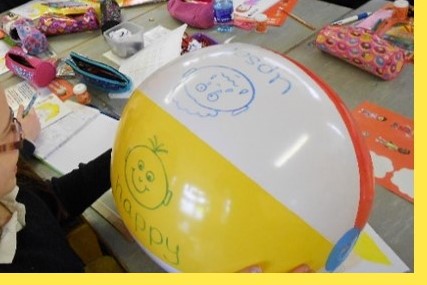
Pupils can find learning new vocabulary tedious and not much fun! The following ideas help reinforce the regular use of new vocabulary and therefore, pupils ability to retain and use it.
A flip chart can be useful in your ‘speaking and listening corner’.
It can be useful to have a flipchart in your ‘speaking and listening corner’. There are various things you will repeat each day as a teacher or during a particular lesson, and these pointers can be listed on a page in a flipchart ready for access at any time
Barrier Games
Barrier games are simple games that require pupils to speak clearly and be attentive listeners. They learn how to give clear descriptions, instructions and clarify through questioning while also developing communication skills such as social and linguistic skills.
More group strategies for oral language activities
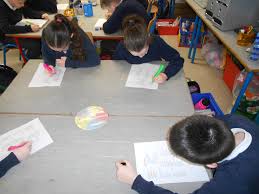
Some examples of group strategies for oral language activities in the classroom:
1. The Jigsaw Technique
2. Three-Step Interview
3. Think/ Pair/ Share Technique
4. Inside Outside Circles
The Jigsaw technique is a cooperative learning method in which students work in small groups. It was first developed by social psychologist Elliot Aronson and his students at the University of Texas and the University of California in 1971.
Group work/ Paired work strategies

The majority of activities in developing oral language in ‘Tip of the Tongue’ involve pupils working together in pairs and in groups. For some pupils, it is often counterproductive to ask them to give descriptions to the entire class. Students are often embarrassed by their minimal knowledge or public exposure may make them uncomfortable and reserved. However, they are often eager to share their ideas with their peers in pairs or group work and in time, build confidence.
Create a rich language-learning environment

The physical environment of a classroom has great power over the quality and the quantity of children’s experiences of oral language (Roskos & Neuman, 2002). Children use print available to them in the classroom and so when creating a rich language environment, be aware that the environment surrounding the pupils meditates the language that they will use.
 Let's get those kids talking!